Data science
Data science is an area that focuses on data analysis using methodologies and tools from different fields such as statistics, data mining, computing, among others. It is a field that includes projects that need to understand, model and make the most of data, whether structured or unstructured. The applications of data science in research are very diverse, it can be very useful in experimental designs, artificial intelligence, economic, social studies and human development. From the CNCA we collaborate with researchers from very diverse areas that complement data analysis and mathematical methodologies with substantive knowledge that gives more value to the different data that is analyzed.
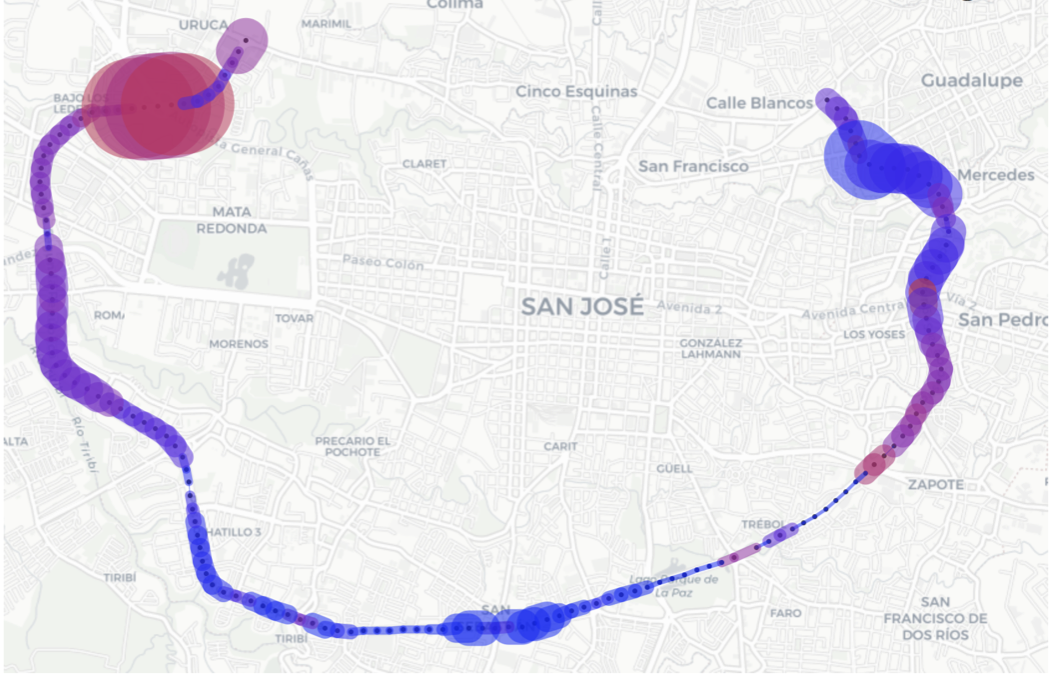
Analysis of traffic and factors associated with Waze database in collaboration with the State of the Nation Program.
The study of urban mobility from data generated in a social network, such as Waze, represents a challenge both in data processing and its contextualization. This is because the data originally used were not captured with the aim to be used as historical records; in addition, to be able to model and understand the mobility patterns captured by the application, it is necessary to find information that supplements other dimensions related to these patterns. Some dimensions that are considered include social, economic, demographic, industrial development, and events of regional or national impact, among others. This project seeks to process data and create different statistical and mathematical models so that these patterns and their associated factors can be understood and eventually estimated. This project seeks to add the different layers of the necessary information to understand a phenomenon as complex as mobility and vehicular traffic in the country. Thus, in collaboration with the State of the Nation Program, it seeks to create visualizations, analyzes, and products that allow the population to access and better understand the behavior of vehicle traffic and its implications on the development of the country.
Analysis of traffic and factors associated with Waze database in collaboration with the State of the Nation Program.